
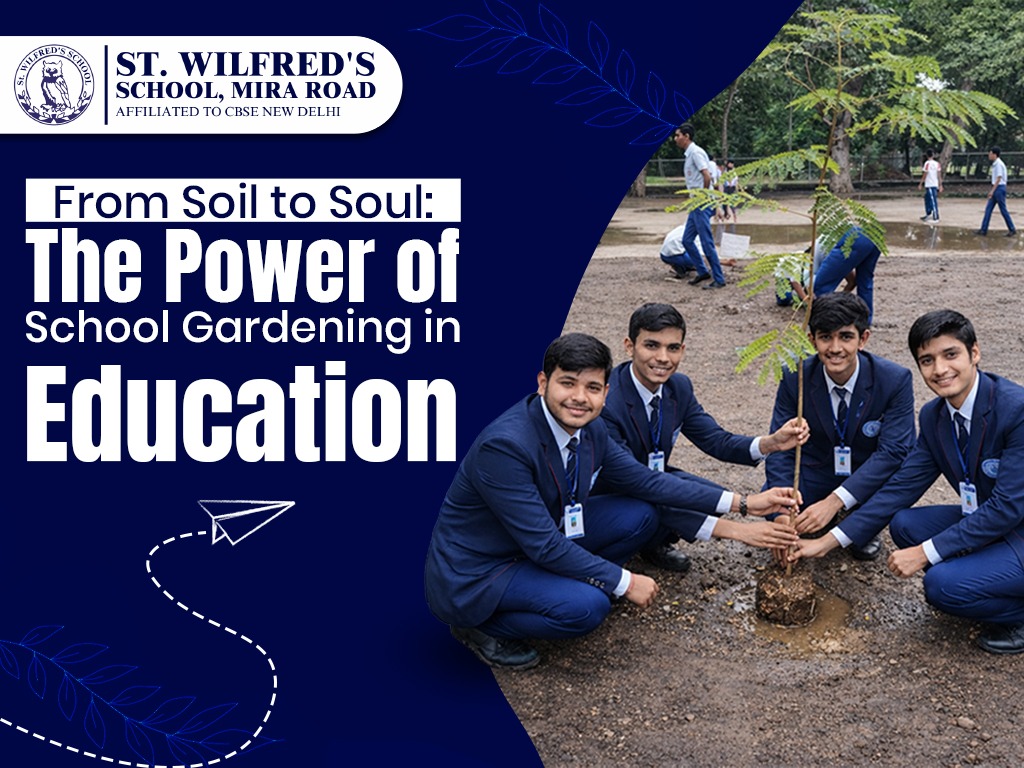
From Soil to Soul: The Power of School Gardening in Education
There is something that almost every child enjoys: pressing a seed into the earth, watering it every morning, watching it grow day by day, and then, one day, a green shoot pushes through the soil. That moment is not just about a plant growing; it is about your child’s effort in creating something real. This is the quiet revolution that gardening in education has been sparking in classrooms around the world.
As our education system evolves to prepare students for an increasingly complex world, traditional textbooks and lectures alone may not be enough. Schools are now looking beyond four walls for answers and many are finding them in the garden.
Why Gardening Belongs in the Education System
For decades, the role of gardening in the education systemwas largely overlooked. Most people see gardening as a hobby, but research consistently shows that students who engage in nature-based activities demonstrate stronger creative thinking, better teamwork, and deeper engagement with core subjects like math, science, and language arts. A school garden transforms this activity into real experiences; biology comes alive when students observe everything firsthand.
Beyond academics, gardening teaches patience, responsibility, and resilience qualities that no standardized test can fully measure, but that every employer and community values.
Hands-On Learning That Sticks
Learning through gardening engages multiple senses simultaneously. Students aren’t just learning about ecosystems; they are feeling them firsthand by living inside one.
Gardening activities for students, such as composting, seed germination experiments, seasonal planting, and weather journaling, connect classroom knowledge to the real world in ways that genuinely resonate.
When a student watches the growth of a tomato plant over six weeks, they’re practising observation, recording data, drawing conclusions, and even learning to handle disappointment because sometimes plants die, and that gives a lesson too.
The Real Benefits of School Gardening
The benefits of school gardening go far beyond greener lunches and a patch of flowers near the school gate. In today’s world, top schools recognize that the importance of gardening in schools is backed by growing evidence across health, academics, and social development.
Here’s what studies and educators consistently report:
- Improved academic performance:students in garden-based programs show better engagement in STEM subjects.
- Better nutrition awareness:Children who grow food themselves are significantly more likely to start enjoying vegetables
- Stronger social skills:garden projects are collaborative, develop communication skills, and promote compromise
- Greater sense of school belonging:A shared garden creates community and reduces any behavioural issues
Nurturing Mental Health, One Plant at a Time
Perhaps the most underappreciated dimension is the benefits of gardening for students’ mental health. In a generation facing problems of anxiety, stress, and screen overload, a garden offers something rare: quiet, purposeful, screen-free time in nature.
Horticultural therapy has long been used with adults who were experiencing depression and trauma. The same principles are currently applying to children. This helps living things build emotional regulation, reduce cortisol levels, and create a sense of accomplishment that digital activities often can’t replicate.
Environmental Education Starts in the Garden
Climate change, biodiversity loss, and food waste are issues that today’s students will inherit. Environmental education is no longer optional; it’s essential. And there is no better classroom for it than a living, breathing school garden.
When students see a bee visit a flower, watch earthworms aerate the soil, or discover the difference between native and invasive plants, they’re building an environmental literacy that no documentary can fully deliver. They begin to see themselves not just as inhabitants of the planet, but as its stewards.
How School Gardening Improves Student Learning
So exactly how does school gardening improve student learning? The answer lies in integration. A well-designed school garden program doesn’t operate in isolation; it weaves into the existing curriculum.
- Science: Plant biology, ecology, weather patterns, photosynthesis
- Maths: Measurement, data collection, geometry of garden beds
- Language Arts: Garden journals, storytelling, research projects
- Social Studies: Food systems, global agriculture, cultural crops,
- Art: Nature illustration, environmental photography, garden design
The best programs train teachers to use the garden as an extension of the classroom, not a distraction from it. When done right, students perform better because of the garden, not despite time spent in it.
What the Best Schools Are Already Doing
Forward-thinking institutions are already embedding garden-based learning into their core philosophy. If you’re looking for a model to inspire, the best school in Mira Roadoffers a compelling example of how modern schools are balancing academic rigour with experiential, whole-child education, the kind of environment where a student can learn algebra in the morning and discover why bees matter in the afternoon.
The shift isn’t just about planting seeds. It’s about planting values, curiosity, and a love of learning that lasts a lifetime.
Conclusion: It’s Time to Grow Beyond the Classroom
The importance of gardening in schools is no longer a fringe idea; it is an educational imperative. In a transformative world that urgently needs environmentally conscious, emotionally resilient, and creatively capable young people, the school garden is one of the most powerful ways we have to engage students and encourage them.
From better mental health to stronger academics, from environmental awareness to teamwork, the benefits are so much and layered as the soil itself. Whether you’re a parent, teacher, or school administrator, the message is clear that it’s time to take gardening in education seriously.
FAQs
How does school gardening improve student learning?
School gardening turns abstract lessons into hands-on experiences, allowing students to practice science, maths, and observation skills in real time, leading to higher engagement and better retention, especially in STEM subjects.
What are the benefits of gardening for students’ mental health? Gardening gives students screen-free time in nature, reducing stress and building emotional regulation. Watching plants growing creates a sense of calm and accomplishment that supports overall wellbeing alongside academics.
What is the importance of gardening in schools?
Gardening in schools builds patience, teamwork, and environmental awareness alongside core academics. It prepares students to understand real-world issues like sustainability and food systems, making it an important part of whole-child education.