
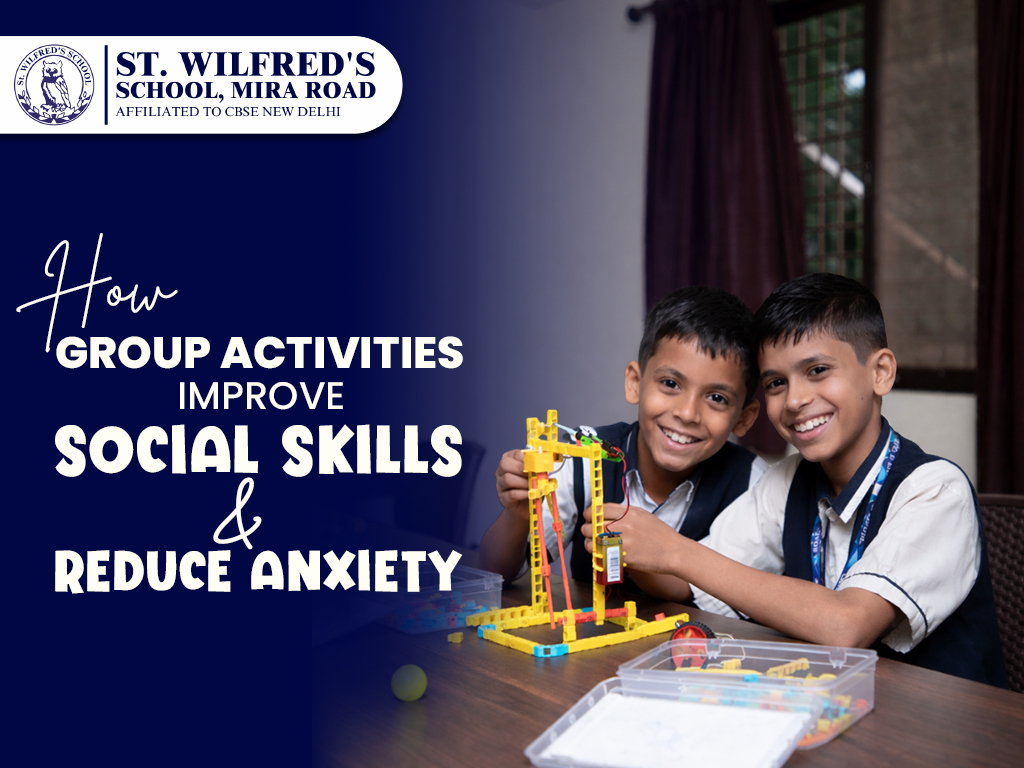
How Group Activities Improve Social Skills and Reduce Anxiety
Growing up is rarely a solo journey. Children and teenagers learn some of their most valuable life skills while they are with other people, whether they are practicing for a school play, participating in a sports team, or collaborating on a science project. The benefits of group activities go beyond simply being enjoyable; they help young people learn how to cooperate, communicate, and control their emotions in a world that is becoming more complicated by the day.
Many students silently battle anxiety, self-doubt, and social isolation in today’s hectic academic setting. Participation in organized groups can be truly transforming for them. This blog examines how group activities foster social skills development and assist young students in confronting their fear.
Why Social Skills Matter More Than Ever
One of the most important abilities a child can acquire is social intelligence, which is the capacity to comprehend, negotiate, and manage relationships. Stronger social skills help students succeed academically, sustain healthier relationships, and have higher emotional well-being throughout their lives, according to a wealth of research.
However, many children today face social anxiety in students at startling rates. Peer engagement has become less natural as a result of increased screen time, distance learning, and academic pressure to perform well. Anxiety often takes over when kids don’t get enough opportunities to interact with others in the real world.
This is where well-crafted group activities for kids come in as a potent remedy.
The Core Benefits of Group Activities
1. Building Communication and Listening Skills
Students must be able to clearly express their ideas and actively listen to others when working in groups, whether they are solving an issue, putting on a debate, or developing a project. In a relaxed, organic environment, this back-and-forth develops both expressive and receptive communication skills. Even timid students eventually start to speak up.
2. Developing Empathy and Emotional Intelligence
Children are exposed to viewpoints that are different from their own in group situations. Working together with classmates who have varied backgrounds, learning preferences, or personalities helps students naturally become more empathetic. Since social anxiety in students frequently results from misinterpreting social cues or fearing criticism, this emotional awareness directly counteracts social anxiety in students. Group exercises that foster empathy aid in normalizing disparities.
3. Reducing the Fear of Social Situations
Psychologists widely agree that gradual, repeated exposure to social situations, in a supportive environment, is one of the most effective ways to reduce anxiety. Group activities provide exactly this: structured social engagement with clear goals and low stakes for failure. Whether it is a science fair team or a drama workshop, students learn that participation is safe, valued, and even enjoyable.
4. Teaching Conflict Resolution and Patience
Any organization will inevitably have disagreements. However, these instances are excellent teaching opportunities rather than a setback. Students learn how to identify common ground, negotiate concessions, and respectfully express disputes when they are led by encouraging teachers. There is no textbook that can adequately teach these lifelong abilities.
5. Strengthening Confidence and Self-Esteem
The increase in self-esteem is among the most underappreciated benefits of group activities. A student’s confidence is boosted when they make a significant contribution to a group endeavor and realize that their opinions are valued. Children who suffer from self-doubt or unfavorable peer comparisons can particularly benefit from this sense of competence and belonging.
The Role Schools Play in Social Development
The quality of a child’s learning environment has a big impact on how much these benefits can be obtained from group activities. The social skills development happens every day, not just occasionally, at schools that include extracurricular activities, sports, collaborative learning, and the creative arts into their curricula.
How the school arranges peer learning, whether it offers a range of extracurricular activities, and how its teachers are equipped to facilitate group dynamics are all crucial factors to take into account when looking for the best school in Thane for your child. The school environment can have a big impact on a child’s mental health, academic performance, and sense of self.
In addition to improving academic performance, schools that encourage group engagement are also more likely to successfully handle challenging problems like bullying and peer pressure. This is significant because the emotional impact of bullying on students can have an extensive and enduring effect, influencing their willingness to engage in social activities, their level of peer trust, and their general mental health. Good group experiences may act as a buffer, helping children in developing a feeling of community and tolerance that reduces the probability that bullying will spread.
Practical Group Activities That Make a Real Difference
Not all group options are created equal. The most beneficial group activities for kids tend to share a few key attributes: their goals should be clear, encourage contribution of every member, and be directed by a supportive adult. Here are some excellent examples:
- Team Sports: Football, basketball, and relay races teach cooperation, strategic thinking, and graceful wins and losses.
- Drama and theater groups: Performing arts build expression, empathy, and courage in front of an audience.
- Science and STEM Clubs: Collaborative problem-solving in structured formats builds analytical and interpersonal skills simultaneously.
- Debate Teams: Students learn to articulate opinions, listen critically, and respect opposing views.
- Community Service Projects: Working toward a shared social goal builds purpose, teamwork, and emotional fulfillment.
When Group Activities Aren’t Enough: Watch for Warning Signs
Despite the enormous benefits of group activities, parents and teachers should pay close attention. If a child exhibits physical signs of concern prior to school events, withdraws from group settings on a regular basis, or feels depressed or afraid in social circumstances, these behaviors may indicate deeper social anxiety in students who require professional care.
The healthy strain of trying something new, or productive social discomfort, must be distinguished from negative experiences. The emotional impact of bullying on students is real; prejudice, mocking, or harassment in social situations can exacerbate anxiety rather than lessen it. Collaboration between parents and schools is necessary to guarantee that group settings are truly secure, welcoming, and empowering.
Conclusion
Group activities are essential to a child’s education; they are not an option. They serve as a place to nurture social skills, gently ease anxieties, and create enduring friendships. Regular, monitored chances for children to connect, talk, and work together help them develop into confident, emotionally intelligent young adults who are prepared to confront the world.
When parents in Maharashtra look at their options, the best school in Thane will be one that places the same importance on social growth and academic success. Because in the end, a child’s capacity to flourish is influenced by both their personal connections and their knowledge.
Frequently Asked Questions
1. At what age should children start participating in group activities?
Children can start structured group play as early as ages 3 to 4 through preschool programs. Official group activities such as sports, clubs, or team projects become particularly important from ages 6 onward, when children develop the emotional readiness for collaboration.
Q2. Can group activities help a child with diagnosed social anxiety?
Yes, but with proper support. For children with diagnosed social anxiety, group activities work best as part of a comprehensive plan that may include therapy.
Q3. How can parents encourage reluctant children to join group activities?
Start with low-pressure, interest-based activities the child already enjoys. Avoid forcing participation; instead, let them observe first, then gradually join in.